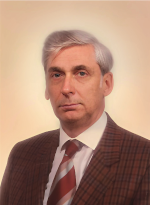
Today, at 8:30 a.m., Doctor Fulvio Cattani, ophthalmologist, joined the House of the Father.
Born into a family of farmers in a small village in Val di Non, the second of four brothers, he spent his childhood attending elementary school and helping his father with agricultural work from a young age. His future seemed destined for farming, following the footsteps of his ancestors, but a serious illness affecting his eldest brother, Flavio, convinced the family to prioritize his education. Young Fulvio, captivated by the stories told by his older brother about school, expressed his desire to pursue education as well. The decision was difficult due to financial constraints, but with great courage, his mother decided to allow Fulvio to attend middle school.
At the age of 11, Fulvio, with his big boots and his bag on his shoulders, faced a daily journey of an hour and a half on foot through the mountains, whether under the sun or in the snow, to reach the valley. He then took a bus to school in the town of Cles, retracing the same journey back home after classes. He devoted himself wholeheartedly to his studies, valuing each day, as the family’s precarious financial situation didn’t guarantee completion of his education.
Thanks to his parents’ sacrifices, he enrolled in a classical high school (liceo classico) at the diocesan school in Trento, where he contributed to his own support by serving as a prefect, recognized for his maturity and responsibility from a young age. He graduated and followed in his older brother’s footsteps by studying Medicine at the University of Padua.
Winning a scholarship every year to support himself, Fulvio graduated from Padua at the age of 26 and immediately began practicing as a general practitioner, benefiting from the advice and support of his older brother Flavio, who by then had become a practicing internist at the Hospital in Cles.
With the salaries that Flavio and Fulvio now contributed to the family, financial problems were resolved, allowing their two younger brothers, Raffaello and Valerio, to pursue education as well. Both graduated with a classical education and obtained degrees in Electronic Engineering from the Polytechnic University of Milan.
Soon after, Dr. Fulvio developed a keen interest in ophthalmology and enrolled in the Ophthalmology Residency Program at the University of Bologna. Upon obtaining his specialization in Ophthalmology, he was employed as an assistant at the Ospedale Maggiore Niguarda ca’ Granda, Milan.
Under the guidance of two prominent figures, Professor Raverdino followed by Dr. Musini, he diligently worked to acquire medical skills and surgical techniques, earning the respect and trust of his superiors. During this time, he passionately engaged in ophthalmic research, becoming the author of numerous medical and scientific publications. He actively participated in national and international ophthalmology conferences, a practice he continued throughout his professional life to stay updated.
It was during a congress in the Trentine Alps that, by pure chance (mistaking a bus), he met Giulietta Anna Gorlani, whom he invited to dinner that same evening. Immediately after dinner, Fulvio declared to Giulietta that he had met the woman of his life. Indeed, a year later, they married, and from their union, Paolo and Lucia were born.
Subsequently, Dr. Fulvio competed for and won the position of assistant at the Policlinico Hospital, a university clinic in Milan, under the guidance of Professor Toselli. He was appointed head of the men’s department by Professor Toselli. Here, he began his teaching activities for ophthalmology residents.
At the age of 44, he participated and successfully passed the competition for the head of the ophthalmology department at the Maggiore Hospital in Lodi, where he remained and worked continuously for 23 years. He quickly and excellently restructured and developed the ophthalmology department (including modernizing the operating room), equipping it with state-of-the-art machinery and introducing advanced surgical techniques. He obtained the corneal transplant qualification, awarded on merit by a specialized commission. He immediately developed a prevention service for eye defects and disorders in preschool and school-age children; he personally visited newborns, with special attention to premature babies. He initiated a special service for ophthalmic complications in diabetics, whom he personally followed. He worked tirelessly both as a clinician and a surgeon, relying on skilled collaborators, some of whom he personally trained. He continued to teach ophthalmology to doctors specializing under him, orthoptists, nurses, and opticians. He maintained the highest level of surgery, constantly studying and developing advanced techniques, and teaching them to his colleagues. He also served as President of the Department Heads, enjoying the respect of all his colleagues and working to facilitate harmonious interaction among all departments. Upon reaching retirement age, he continued his private practice for several years, much to the delight of many patients who saw him as a compassionate, knowledgeable, and attentive doctor.
Throughout his long career, Dr. Fulvio operated on and treated thousands of people and also volunteered his services, free of charge, to the Orphanage, the House of Single Mothers, the Blind Apostolic Movement, San Vincenzo, the seminary of Lodi, and the clinic run by the Franciscan Friars Minor of Milan. He earned the human and professional respect of his superiors, colleagues, and, above all, patients who entrusted themselves to him, confident of finding competent care and human comfort. He also served as an Extraordinary Minister of the Eucharist, bringing, as long as his health allowed, the sacrament with great faith and Christian joy to the sick in their homes.
Fulvio, throughout his life, was an affectionate and grateful son to his parents and generous towards his brothers; in his 54 years of marriage, he was a understanding and affectionate husband and a loving and incredibly sweet father to his children. His loved ones wish to express deep gratitude to the Most High for giving them this immense gift: to share much of their lives with this Man.